
Katey Woodruff, Features Editor–
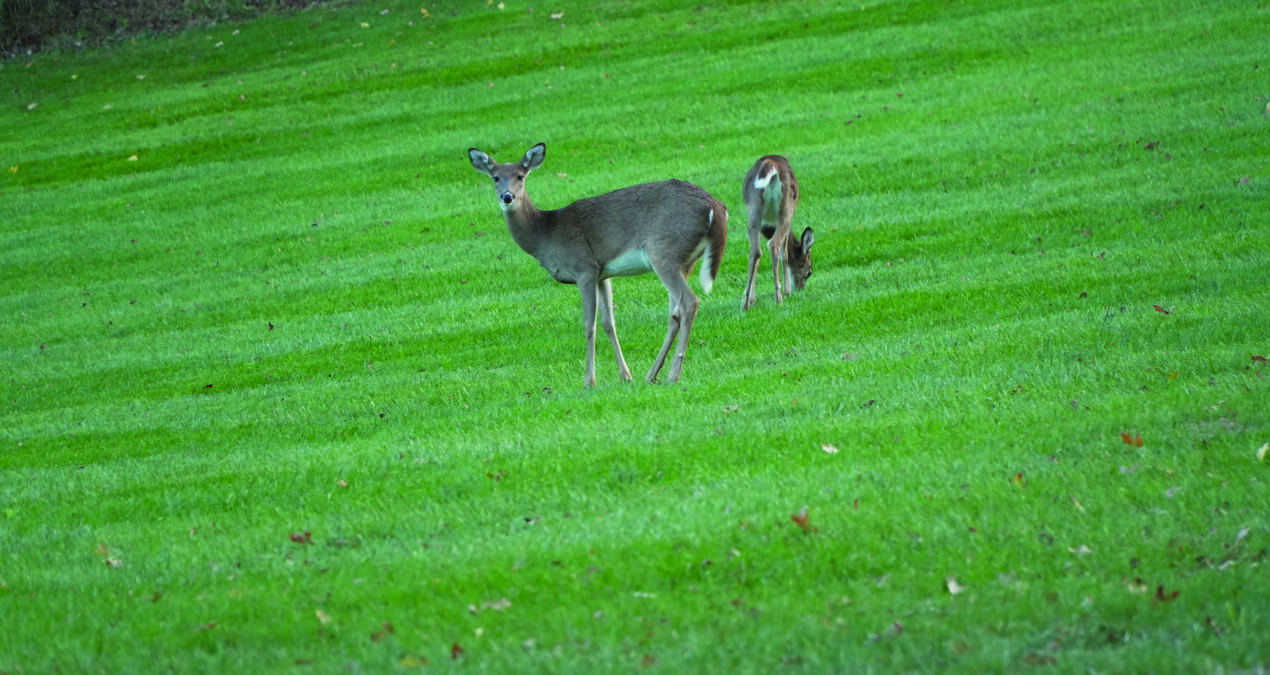
Licking County is situated in a heavily deer-populated region of Ohio, a state that has roughly 670,000 white-tailed deer. Denison’s campus itself has always been home to many free roaming deer.
Despite the docile nature of the animal and the peaceful way in which they interact with traversing Denison students, the deer population has grown unchecked for the last several decades and can pose many negative consequences.
In 2019, Denison’s campus became labelled as a Certified Wildlife Habitat and Tree Campus by the National Wildlife Federation. This title can be seen as merely a formality since the campus had maintained a diverse ecosystem on its 350-acre Biological Reserve since the mid-1960s.
“So the deer population has been unchecked for many, many years, and I think we’re getting to, in my opinion, a tipping point in the deer population,” said Jeremy King, director of sustainability and campus improvement. “Like we have got to do something.”
The deer that roam campus, more freely at night than during the day, feel comfortable walking near people and cars, a situation that many students love, but is actually indicative of habituation.
Habituation is caused by urban expansion into habitats and can lead to more deadly interactions with automobiles, and specifically in the case of the deer, closer proximity to the Lyme disease-carrying deer tick.
“Because people around campus do not threaten or frighten the deer, they do not associate humans with negative effects and so they learn to ignore them, at least until you get really close to them,” said Dr. Geoff Smith, professor of biology and chair of Denison Biological Reserve committee.
Smith believes that the population may be growing more quickly because of the elimination of many natural predator species, milder winters due to climate change, and more female deer having twins or triplets. The high number of deer can even lead to an increased number of turkey and black vultures, which are carrion birds, because there are more carcasses.
According to Smith, the number of deer in the Biological Reserve have been causing levels of overgrazing that he has not seen in his 26 years working at Denison.
One of the biggest issues with overgrazing is that the deer are eating tree saplings, before they have a chance to grow into trees, which then causes issues with the insect populations.
“We are creating an unhealthy forest, because if there are no young trees that are growing to become larger trees because the deer are eating them all, then you have a forest that is predominantly medium age to older age trees,” King said. “There’s nothing there to replace them when they fall or die, whatever it is, and that’s very, very problematic.”
The other issue with the deer overgrazing is that it causes financial and aesthetic damage to the planted landscape that the groundskeepers carefully curate. The plants that are supposedly deer-proof still get grazed until the deer realize they don’t like them, but it is too late.
“So we have landscaping all over the place, and we plant, we spend a lot of money on flowers and shrubs and things like that, and that’s like a candy store for deer,” King said.
According to both Smith and King, there are ways to manage the deer population that are being discussed.
“Denison has not made any plan to do anything at this point like we have. There is no plan. I just want to make that very clear,” King said. “But it’s an issue that we’ve been talking about.”