
Donald Keough, Editor-in-Chief
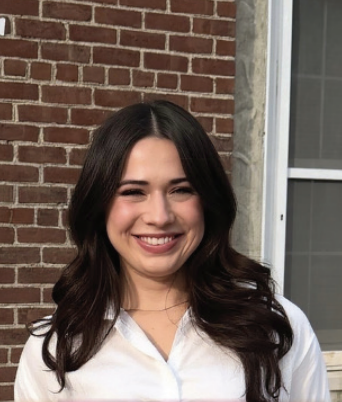
Among commitments to extracurricular organizations, Sophia Paolillo ‘27 has spent much of her time at the Granville Township Fire Department.
At her peak, she estimated that she spent 20 to 25 hours at the station per week, and now is close to 900 hours of volunteering.
Her hours have consisted of early evening to late night shifts, sometimes lasting until midnight. Some volunteers will choose to stay the night, although she hasn’t herself. While at the station, she stands by until a call comes in for an emergency. When the call comes, she leaves with the other crew members at the station to assist the paramedics.
Like many of the student volunteers, Paolillo is not certified as a firefighter but as an EMT, so her primary job is to assist the paramedic during a case.
Although the process of certification provides the opportunity for students to be certified to assist with fires, many student volunteers are a part of a Denison six-week internship program at the Ohio Fire Academy in Reynoldsburg.
After gaining her certification from the academy during the summer after her freshman year, she began to work at the department. The community she’s found at the department stands out the most to her.
“It’s kind of like an adult frat house, but in a good way,” Paolillo said. “They cook meals together, they do your chores together, they work out together. It’s honestly heartwarming and nice to be around.”
For the department in Granville, full-time firefighters often spend one 24-hour day in the department and then take two days off. In the amount of time they spend with each other, they often develop routines such as “family time” where they play card games together. There are also unspoken rules like not taking the chair that’s facing the TV from a certain angle or bringing ice cream during ride-alongs.
Because of their frequent time spent together, Paolillo said that spending enough time at the station is important or else you might “feel like an outsider.”
“You have to stay committed to it, and show up,” Paolillo said. “That’s the biggest part of the whole process. Becoming a familiar face there, and getting to know the people there… gets you more in touch with those around you.”
Staying committed also has helped her build her abilities as an EMT.
“Sometimes it feels like you are extremely inexperienced compared to other people working and so I think realizing that, ‘Oh, wait, I can actually do these things,’ is important,” Paolillo said. “Showing up shows the people that you’re working with that you can do the work, and it helps build up your confidence.”
After Paolillo graduates, she hopes to become a physician assistant, which requires additional schooling through a rigorous master’s program. Part of her application requires a set number of volunteer hours, and volunteering at the department helps with this.
“I think it has prepared me really well to be in a higher position,” Paolillo said.
There are four current student volunteers at the department. But in the past, there used to be a much larger number of volunteers.
Lt. Brandon Reece ‘04 is a current firefighter and volunteered as a student and was one of 13 student volunteers, and eventually joined the staff in 2007. When he was a student, the fire department was located in the building where the Three Tigers Brewing Company now resides, which is about half a mile closer to campus than its current location.
The larger student involvement meant that the department relied on volunteer work more heavily than it does today. Students were often called down to the station at random during the day, so much so that professors were used to students intermittently leaving in the middle of class for calls.
“It was not uncommon for us to be in the middle of a class. Call goes off. We hop up and run out of class and run down,” Reece said. “Then you’d see five or six people sometimes run down the hill all together from different buildings on campus.”
The need for volunteers was also greater because the department had a smaller staff. The department used to be run by a private, nonprofit contractor and was mostly composed of volunteers. There were three people on duty during the day and one at night. They would average 1,000 calls per year.
Today, the department has seven paid staff members and receives around 2,600 calls per year.
“It used to be that you could get a call for an EMS or fire call, and one truck [went] out with the paid staff, and then relied on volunteers to bring all the other trucks out,” Reece said. “As we got busier and less volunteers were available, we filled the volunteer roles with paid roles, so that the total number of volunteers in general has decreased because of that.”
Certification processes have also become more robust, making it harder for volunteers to get certified. Reece was able to get his certification for fires in 36 hours when he was a student.
“As it’s become harder and harder to get those training sessions, I can understand why people aren’t doing it, especially when you have a full load on campus, and now you’re expected, on your time off, to go to the EMT class or fire class,” Reece said.
During the department’s transition to accommodate a larger number of staff members, their operations were slightly hindered due to low volunteer numbers. They currently aren’t struggling to serve their responsibilities at their current level of staffing and volunteers.
“You’ll see that around a lot of parts of the country… departments really still rely heavily on volunteer people, and not having that definitely impacts your ability to respond to calls,” Reece said. “For us, because we have transitioned so much, it’s not as much of an issue anymore.”
Throughout the department’s transition, he said that the community within the department has remained welcoming and uplifting. He enjoyed being a part of the department as a student as it was a way for him to get involved and meet other members of the community.
Now, he said “it’s definitely a bring-you‑back‑to‑home type feeling” whenever he’s called back up to campus. He also said that it’s unique to see other students volunteer.
“I kind of have a flashback a little bit whenever I see a new Denison volunteer come in or [we’re] doing interviews for the internship,” Reece said. “It’s been really good to be able to see that and see this program still continue.”