
Nhat Linh Dang, Asst. News Editor
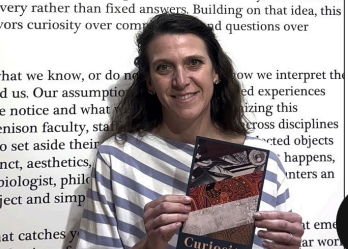
The Denison Museum is encouraging visitors to slow down and discover the joy of not knowing through its latest exhibition, Curiosity, on view through April 3.
Curated as a collaborative campus-wide project, the exhibition features more than 100 objects selected from the museum’s permanent collection by Denison faculty and students. According to Megan Hancock, the director and curator of Denison Museum, the exhibition began with a simple yet powerful question: “what are people curious about?”
Unlike traditional exhibitions organized around a singular theme, “Curiosity,” which opened Jan. 19, embraces unpredictability and personal connection.
“We had over 100 faculty, staff and students all select objects from the permanent collection simply because they were curious about them,” Hancock said, resulting in “an exhibition that’s really shaped by wonder and personal connections as well as unexpected discoveries.”
At its core, the exhibition reimagines how visitors engage with museums. “This exhibition invites you to explore the Denison museum a little bit differently,” Hancock said, describing it as a space that encourages exploration without the pressure of expertise.
As a teaching museum, the Denison Museum places education at the center of its mission. Hancock notes that Denison Museum really strives to put teaching and learning at the heart of everything they do. She pointed to the museum’s integration with classes and collaboration, along with student programming across campus.
The exhibition also highlights the behind-the-scenes work required to bring such a project to life.
“It starts with an idea,” Hancock said, and grows through collaboration with artists, lenders, designers, and museum staff. The process can take years, with installation alone sometimes lasting weeks depending on the complexity of the objects.
Among the works on display, Hancock points to a piece by artist Nathalie Miebach as particularly meaningful. The artwork transforms data from Hurricane Harvey into a physical form, incorporating rainfall levels, wind speeds, and even emergency messages.
“It’s a different way of thinking about weather and storms into a visual representation that we can see in a museum,” she said. Adding on to that, Hancock noted that it may also inspire viewers “to go and learn more about what happened to that community.”
Curiosity aims to extend beyond the gallery walls.
“If you did find something curious… I hope you’ll learn more about it,” Hancock encouraged visitors to let their interests lead them into further research and discovery.
The museum itself is designed to be accessible to all. “You do not need to be a lover of just fine art or culture,” Hancock said. “We are free and open to the public, and we offer a wide range of exhibitions.”
Beyond exhibitions, the Denison Museum hosts a variety of events from artist talks and panels to workshops and family programming, creating engagement across the community.
“Whenever you feel like you might be in need of a little inspiration… come on down to join us,” Hancock said.
Reflecting on her experience, Hancock highlights the broader impact of the museum within the university.
“The biggest thing I have learned during my time at the Denison Museum is the amazing community that Denison has,” she says. “I feel like I always get to learn something every day.”