
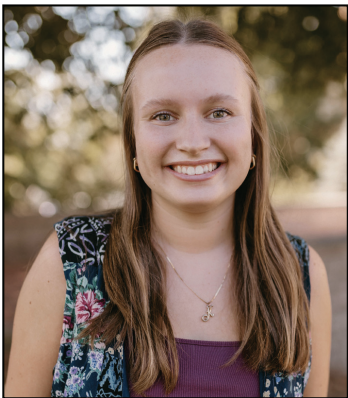
Katie Corner, Staff Writer
As a docent in the admission office, I am trained to answer high schoolers’ most burning questions.
I know that 93% of graduates leave Denison with a mentor and 1 in 3 of us are varsity athletes. My answer to the inevitable “Why Denison?” question is down to a science. Even my friends, current students, come to me with inquiries about where to find the registrar’s office or when the latest construction project will be completed. I consider myself well-informed on all things Denison.
But a few months back, a prospective student completely stumped me.
“Can you tell me more about service-learning at Denison?” She asked. “I am really interested in hearing what those classes are like.”
I looked at her blankly, searching the recesses of my mind for any recollection of such a thing called “service-learning.”
Sensing my puzzlement, she gave me more to work with: “I am super involved in my school’s community service organization, and I would love to continue volunteering here.”
I told her what I knew about DSCA and the opportunities they offer students to volunteer with a variety of local organizations every week. I shared my own experience of service through my Greek chapter’s national philanthropy. But I had nothing to give her on service-learning. In the end, the best I could do was tell her to Google “service-learning Denison” and see what popped up. It was a lackluster response; she knew it and so did I.
I took my own advice following that conversation and went online to enlighten myself. On the Denison homepage, following a trail from “Campus” to “Get Involved” to “Service Opportunities,” there it was: Curricular Service Learning. Then, a one-sentence description: “Service learning courses use community service and structured reflection as a text for the course, to deepen student engagement, and to provide students with experience in applying concepts and skills in ‘real world’ settings.”
That was it. Any additional information about the program was hidden behind the MyDenison wall, meaning anyone not currently enrolled as a student or faculty member could learn more. No wonder that girl had questions.
Coincidentally, that same week aligned with course registration. And at the recommendation of my advisor, I signed up for a course called “Beyond Good Intentions,” instructed by Professor Lucy Bryan, before I even realized it was a service-learning course. (This irony is not lost on me.)
The course description stated: “Through reading, writing, and regularly volunteering with local organizations, we will improve our abilities to receive and tell stories. We’ll consider how to avoid harm in the name of helping. And we’ll intentionally cultivate compassion, presence, and self-awareness.”
I’m writing this now as I approach the end of my first and only service-learning experience at Denison, and I can say with confidence that more of this type of learning would have done me a lot of good in college. For 10 weeks, I have been a volunteer at the Community Drop-In Center at the Holy Trinity Lutheran Church in Newark. Their mission is to serve and uplift anyone who enters the door, providing daily meals, monthly haircuts, representation from the Licking County Coalition of Housing, and healthcare through free clinics.
On Friday afternoons, I serve meals to people who need them and have conversations with people whose experiences are vastly different from mine. I have forged friendships with my fellow volunteers and guests who share stories with me about what it is like to be unhoused in Licking County. Some days are slow; one in particular I recall after police swept camps in Downtown Newark and arrested 15 of the Drop-In regulars. Those who could come in that day updated us on the status of their, our, friends and left with extra meals. I returned to campus, where I have a bed, an apartment and a full fridge, feeling the full weight of my privilege as a Denison student.
Every week, I wash dishes and sort donations and contribute to something larger than myself for a small fraction of my time. This experience has done wonders for my education, my perspective on issues of identity and my compassion for others. To say service-learning has been eye-opening for me would be an understatement. For this reason, I feel strongly that more Denison students should include service-learning courses in their schedule, that is, if more faculty feel emboldened to offer them.
Professor Bryan, with years of experience teaching service learning at her previous institution, has carefully designed a curriculum that gets us talking and thinking about service. Through routine mindfulness practice and weekly reflection assignments, this service-learning class has created a space for me and others to think seriously and often about how college students can provide service that is truly helpful, for us and for those we serve.
Conversations around service-learning at Denison need to be more frequent. It should not have taken me until the last semester of my academic career to take a service-learning course and until my final year to even discover they exist. I say this as someone who is involved on campus and engaged with a wide variety of offices, departments and organizations at Denison.
And I say this as a journalism student. For students in my major, getting “Off The Hill” to report stories and make connections beyond campus is foundational. It saddens me to think that students in other departments may leave their four years at Denison without getting to know Granville, Newark and Licking County. As a private university, our relationship to the community we inhabit matters greatly. With more service-learning classes across all academic departments, students and our community members would mutually benefit.
Denison has chosen to be highly career-focused, channeling resources to preparing students to get a job and thrive in the workplace. I argue that community service plays a crucial role in career readiness, even for those who don’t plan to enter helping professions. My service-learning course has equipped me with strong active listening skills and the ability to hear and hold narratives that may not align with my own. I have been witness to systematic discrimination, from healthcare, housing, police and governmental forces, and will take this knowledge with me as I launch my own career. There is room for Denison students to have an even greater competitive edge in the job market and service-learning courses can help get us there.
Students may be aware of consistent opportunities for service through DCSA, an organization I know does very valuable work, through Greek organizations or sports teams. But my time in a service-learning course has taught me that effective volunteer work requires education and preparation. For Denison students to go out and positively impact community partners, more of us should be enrolled in classes where we learn to have conversations about inequity, to think critically about why service matters, and to assess the quality of our service by its impact (and not just our intentions).
This semester has been the only one in which community service has become a regular part of my routine, and that is because I am taking Professor Bryan’s course. At the Drop-In Center, I have seen faces light up when they are met with respect, empathy and a smile. Service should be baked into the curriculum of more courses at Denison in order to create students and graduates who don’t merely complete service hours to check a box but who walk away from Denison having learned what it means to really help others.
Katie Corner ‘26 is a journalism and religion double major from Salem, Oregon.