
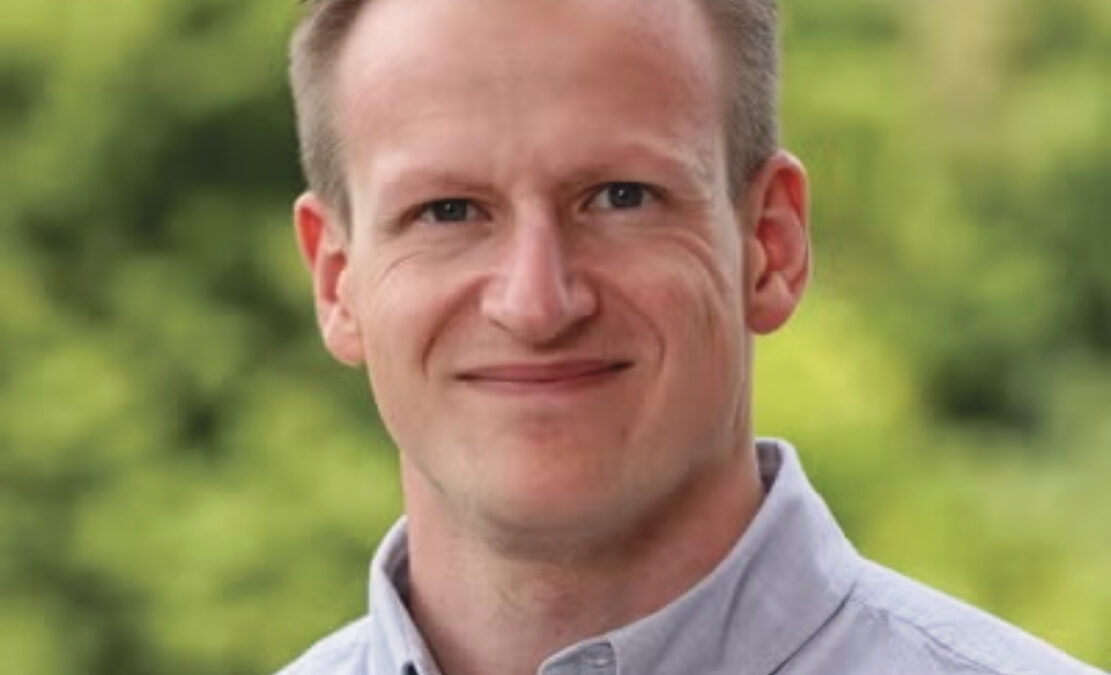
Ivan Panov & Nhat Linh Dang, Staff Writer & News Editor
Accompanied by the Global Studies Department, over 30 students gathered in Olin Hall 114 on Sept. 14 to hear Data for Political Research (DPR) Professor Miles Williams talk about his recent research.
His presentation, a Global Studies Seminar titled “Rise and Fall of International Order,” questioned the state of the current world order and what can be learned about it in a computer simulation
During his presentation, Williams introduced the concept of international order with three key structures: a multilateral security regime, meaning a combination of military alliances and informal security partnerships like intelligence sharing; a system headed by one or more major powers to enforce rules; and reciprocity, meaning security patronage by world leaders in exchange for tribute.
Some type of international order has existed over the past 200 years, from the Post-Napoleonic Wars’ Concert of Europe to the present liberal order.
Williams then presented his research inspired model regarding the Modeling Emergent Social Order (MESO) – a computer simulation that helps understand conflicts, founded by an Ohio State University professor Bear Braumoeller in 2021.
After professor Braumoeller passed away in 2023, Williams said that it was “really unfortunate, because they were doing some incredible work” since no other lab has come on line to take MESO’s place.
Williams is “trying to pick up the baton” after Braumoeller, because the questions about order and conflict “are too important to leave unaddressed” and wants to “keep the momentum going.”
A MESO-inspired computational network model of order is developed and applied into statistical analysis on the current liberal order. Williams said that the liberal order is “in doubt amid rapid U.S. realignment” such as debates involving Trump’s second term and its effects on liberal order and multilateral institutions, “but definitive answers are elusive.”
Williams said that he needed something to force him “to be more precise” and to “aid his thinking,” noting that current global conditions are unprecedented, and the media often struggles to present it in a comprehensible way.
Simulations are thinking aids that make it easier to deduce consequences and derive explanations in situations like these.
Williams presented the simulation by running two scenarios with each assuming a world of 10 countries and one leader or hegemon. Simulation one showed a leading country’s interests and governance shifting gradually, meanwhile simulation two showed a hegemon’s interest and governance shifting rapidly.
The simulations showed that global leaders can only maintain order if they shift their positions slowly and that order members “cannot stomach rapid change and will leave order even if it
means more uncertainty”.
Williams combined three datasets to track alignment of the velocity of
change to measure whether the U.S. is moving too fast at “our current moment
in time” with the rest of the living order to keep up. He also compared a time-series forecast of alignment with the actual alignment between the U.S. and order members.
His research found that in 2025, the U.S. broke significantly from members
on foreign policy.
The computer simulation, according to Williams, confirms that when world leaders shift their positions too quickly, they will alienate their order members.
“[The order members] cannot stomach rapid change and will leave order, even if it means more
uncertainty,” he said.
Williams said that the results of his research do support the argument that the liberal order is in trouble, but it is “too soon to confirm” if it’s time to start writing the order’s obituary.
His work wasn’t foolproof, either – one limitation of his work was that he has an older computer that tends to lag, making it difficult to pay close attention to detail during the planning process.
Misha Maryan ‘27, who attended the presentation, shared that he wasn’t surprised with the statement “if you shock nations with foreign policy shifts, they’re more likely not to follow you with those shifts.”
Maryan also believed that the states can potentially follow it if a world leader reduces the cost of tribute to that country for the participation of that order.
“It’s not necessarily as cut and dry as the hegemon pulls away and the subordinate states don’t follow,” he said.
After the presentation, Williams said his next plan is to find “ambitious students” in graduate and
undergraduate programs to help him on his research project.
“There is still hope,” he said. “But more work remains to provide theoretically informed predictions about the aftermath of order collapse.”